Long-Term Care Planning for a Secure Retirement

Long-term care planning protects your retirement savings from a major financial risk, as 70% of adults age 65 and older will need long-term care, often costing over $155,000 per year in Pennsylvania. Without preparation, these expenses can quickly deplete your nest egg and burden your family. We’ll help you put together a tailored strategy without annual premiums, giving you peace of mind and flexibility through retirement planning for long-term care needs that safeguard your assets and options.

Why Long-Term Care Planning Matters in Retirement

Long-term care costs can drain your nest egg if you haven’t planned ahead. Many retirees assume Medicare will cover their care needs, but that’s a costly misconception. Traditional Medicare only covers short-term skilled care, such as rehabilitation after a hospital stay. It does not pay for ongoing custodial care like help with eating, bathing, and dressing.
More than 90% of long-term care patients need these custodial services, either in their homes or in assisted living and nursing facilities. Without proper planning, you’ll pay out of pocket, depleting retirement savings you worked decades to build. These expenses can quickly exceed hundreds of thousands of dollars, leaving little for your spouse or heirs.

The Retirement Planning Risks of Long-Term Care Costs

The financial impact of long-term care is staggering. Consider these realities:

  • 70% of people turning 65 today will require some form of long-term care during their lifetime
  • The median cost of a private nursing home room exceeds $155,000 annually in Pennsylvania
  • In-home care averages $60,000 to $70,000 per year
  • Assisted living facilities typically cost $50,000 to $80,000 annually
  • Long-term care costs often increase by 10% or more each year

Without planning, these expenses destroy retirement income plans. A single year of nursing home care can wipe out decades of careful saving. Three years of care could eliminate most retirement assets, leaving you dependent on Medicaid and giving you limited choices about where and how you receive care.

Many retirees mistakenly believe they’ll never need long-term care or that their children will provide it. The statistics prove otherwise, and relying on family members creates emotional and financial strain that affects everyone.

long term care planning

Integrated Long-Term Care Strategies

Long-term care retirement planning should be part of your overall retirement strategy, not an isolated insurance purchase. Traditional long-term care insurance requires expensive annual premiums that increase over time, and if you never need care, you lose everything you paid.

Asset-based solutions offer a better approach. These strategies protect retirement savings from care costs while preserving your wealth if you don’t need care. Asset-based long-term care allows you to:

  • Fund coverage with a single asset instead of annual premiums, and potentially triple that asset’s value to cover costs.
  • Receive tax-free death benefits for your heirs if you don’t use the coverage
  • Access funds for in-home care, assisted living, or nursing facilities
  • Maintain control and flexibility over your assets
  • Protect your nest egg from being wiped out by care expenses

This integrated approach addresses how to plan for long-term care in retirement while maintaining your financial security. Your wealth remains protected whether you need care or not, unlike traditional insurance policies, where you lose premiums if you stay healthy.

Learn more about our wealth management approach, that can’t be found on Wall Street, and includes long-term care planning.

Options for Long-Term Care in Retirement

Planning means understanding your options for care settings and costs. You can receive long-term care in several environments:

In-Home Care

Many retirees prefer aging in their own homes with assistance. Home care allows you to maintain independence while receiving help with daily activities. Costs vary based on the level of care needed, typically ranging from $25 to $40 per hour.

Assisted Living

These facilities provide housing, meals, and assistance with daily activities while allowing more independence than nursing homes. Monthly costs average $4,000 to $7,000, depending on location and services.

Nursing Homes

For those requiring skilled nursing care, nursing homes provide 24-hour medical supervision. Private rooms in Pennsylvania exceed $155,000 annually, while semi-private rooms cost slightly less.

Memory Care

Specialized facilities for dementia and Alzheimer’s patients offer secure environments with trained staff. These typically cost 20-30% more than standard assisted living.

Each option impacts your retirement income differently. Without planning, you’ll face impossible choices between depleting your savings or accepting substandard care. Proper planning ensures you can afford the care setting you prefer.

Understanding your options helps you protect retirement savings from care costs before a health crisis forces hasty decisions.

How We Help

We integrate long-term care planning into your broader retirement strategy, protecting your assets while providing flexibility for care choices. Our approach differs from traditional advisors who simply sell expensive insurance policies.

We analyze your complete financial picture through our Financial MRI process to determine the right strategy for your situation. We then help you:

  • Identify asset-based solutions that protect wealth, whether you need care or not
  • Eliminate annual premiums that drain retirement income
  • Ensure coverage transfers as tax-free death benefits to heirs if unused
  • Build flexibility to receive care at home, in assisted living, or in nursing facilities
  • Coordinate long-term care planning with income strategies and tax efficiency
  • Learn how to secure long-term care protection, even if you’ve been turned down in the past and are between the ages of 50 and 80.

Our clients receive ongoing support through annual performance reviews that adjust their plans as needs change. You’re never locked into a rigid strategy that doesn’t adapt to your evolving situation.

We’ve helped thousands of retirees prepare for long-term care without sacrificing their financial security. Our asset-based approach provides coverage amounts ranging from hundreds of thousands to over a million dollars, depending on your needs and resources.

Benefits of Long-Term Care Planning

A well-designed plan delivers multiple benefits beyond simply covering care costs:

In-Home Care Options

Receive professional care in the comfort of your own home instead of being forced into a facility due to a lack of funds.

Care in Assisted Living or Nursing Homes

Access quality facilities with the care level you need when staying home is no longer safe or practical.

Peace of Mind for Your Loved Ones

Remove the burden from family members who would otherwise struggle to provide care or pay for it. Certain policies can even compensate loved ones for providing care.

Tax-Free Death Benefits for Your Heirs

If you don’t need long-term care, your heirs receive the full benefit amount tax-free, unlike traditional insurance where premiums disappear.

No Annual Premiums

Asset-based strategies eliminate the ongoing premium payments that stress retirement budgets and often increase dramatically as you age.

Who Needs a Long-Term Care Plan?

A long-term care strategy isn’t just for the elderly or wealthy. It’s for anyone who wants to protect their financial future and avoid placing burdens on family. You may benefit from planning if:

  • You’re over 50 and thinking about retirement
  • You would rather receive care in the comfort of your own home
  • You want to avoid relying on Medicaid or government assistance
  • You have financial assets you depend on or want to protect for heirs
  • You care for an aging parent and want to avoid creating similar burdens for your children
  • You want control over where and how you receive care if health issues arise

The best time to plan is now, while you’re healthy and have options. Waiting until you need care eliminates most strategies and leaves you with limited, expensive choices.

“We’re confident with the long term care insurance through Crash Proof®. It balloons to three times its value when we need it, and it’s nice to know that it’s there for us for our future.”

Dave and Patricia Janssen, CPR Client Since 2024

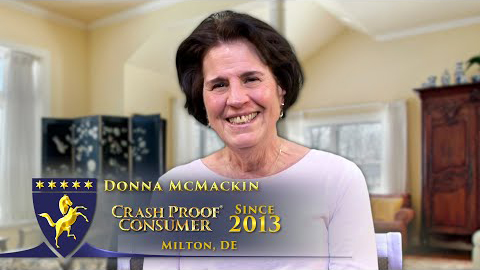
“The LTC Policy that I have through Crash Proof® covers $9,000 per month in care. Should I be fortunate and not have to use that, it goes to my beneficiaries.”

Donna McMackin, CPR Client Since 2013

“All the money that we put into LTC is growing right now. If my husband or I need it we have it, and if we don’t need it then our children still reap the benefits.”

Patti Pierantozzi, CPR Client Since 2014

“LTC can be used in many different places, whether it be a nursing home, in your own home, it’s comforting to know when you get to that point in your life you’re getting that help you need.”

Susan Herr, CPR Client Since 2018

“It’s a peace of mind. to know that if you go into a nursing home the children don’t have to cover it. If you don’t use it and god takes you home, the children can have that money.”

Sam Lepore, CPR Client Since 2012

“I feel that it’s important to look into long term care because the older you get the more aches and pains you feel you just don’t know what you’re going to develop in today’s world.”

Joann Gallo, CPR Client Since 2016

Real People. Real Results.

Play Video
Tired of watching the market take back what you’ve earned? The proprietary Crash Proof Retirement system gives you a proven way to grow while protecting your interest returns every year, even when the stock market drops
Play Video
At Crash Proof Retirement. We understand that out of all the threats to your retirement future, your health is the greatest. That's why our firm offers unique asset based, long term care strategies to provide financial stability and peace of mind to our clients like Donna McMackin.
Play Video
With the market experiencing significant ups and downs this year, many retirees have reason to worry—but not Crash Proof Consumer Russell Convery. Since joining Crash Proof Retirement in 2017, Russell has enjoyed complete protection from market losses while watching his money grow safely.
Play Video
Many retirees don’t realize the IRS reserves the right to help themselves to the money in your retirement accounts by raising taxes. But there's a little-known IRS rule that can help protect your nest egg from taxes and required minimum distributions (RMDs).
Play Video
Social Security is often just a breadbasket of retirement income—yet many retirees treat it like the whole meal, leading to reduced benefits and financial stress. By claiming Social Security benefits as early as age 62, retirees take a 30% pay cut compared to waiting until full retirement at age 67.
Play Video
Want to know how to earn more than you would in the stock market—without risking your savings? Crash Proof client Barbara Panzano shares how she earned double-digit interest returns her first year with Crash Proof Retirement, including a 20% return in one vehicle, and 13% in another, all while protecting her principal from market losses.

Frequently Asked Questions About Long-Term Care Planning

Long-term care planning integrates strategies to pay for future health needs into your overall retirement plan. It addresses how you’ll cover costs for assistance with daily activities like bathing, dressing, and eating if illness, injury, or aging makes you unable to care for yourself. Planning ensures these expenses don’t deplete your retirement savings while giving you choices about care settings.

Long-term care costs can devastate retirement income. A single year in a Pennsylvania nursing home exceeds $155,000, while in-home care averages $60,000 to $70,000 annually. Without planning, these expenses force retirees to withdraw unsustainable amounts from retirement accounts, often depleting savings meant to last decades. Many retirees spend down all assets within a few years of needing care.

No. Medicare only covers short-term skilled care after hospitalization, such as rehabilitation. It does not cover custodial care for daily living assistance like eating, bathing, and dressing. More than 90% of long-term care patients need custodial services that Medicare won’t pay for. Without private planning, you’ll pay out of pocket or qualify for Medicaid by spending down your assets.

Start planning while you’re healthy, ideally 5-10 years before retirement, typically between ages 55 and 65. Earlier planning provides more options and better rates. Waiting past 65 could result in diminished benefits and higher chances of denial due to health issues. The sooner you plan, the more protection you secure for your retirement savings.

Asset-based long-term care strategies protect retirement savings better than traditional insurance. These solutions use a single financial asset, instead of annual premiums, and can triple that asset’s value to provide coverage for care if needed, and transfer as tax-free death benefits to heirs if unused. Unlike traditional policies where premiums disappear, asset-based plans preserve your wealth whether you need care or not, making them ideal for retirement planning.

Take Control of Your Retirement Future

Don’t leave your health and wealth to chance. Long-term care planning ensures you’ll receive quality care without destroying the nest egg you spent a lifetime building. Your family deserves protection from the emotional and financial burden of providing or funding your care.

We’ll help you build a plan that fits your lifestyle, protects your loved ones, and gives you confidence in the years ahead. Whether you choose in-home care, assisted living, or nursing care, you’ll have the resources to make decisions based on what’s best for you, not what you can afford.